
DISC Model Personality Types
DISC is a workplace behavioural model used to help people understand how they tend to communicate, approach tasks, respond to pressure and work with others. It is often used in team development, leadership training and communication workshops because it gives employees and managers a shared language for discussing working styles.

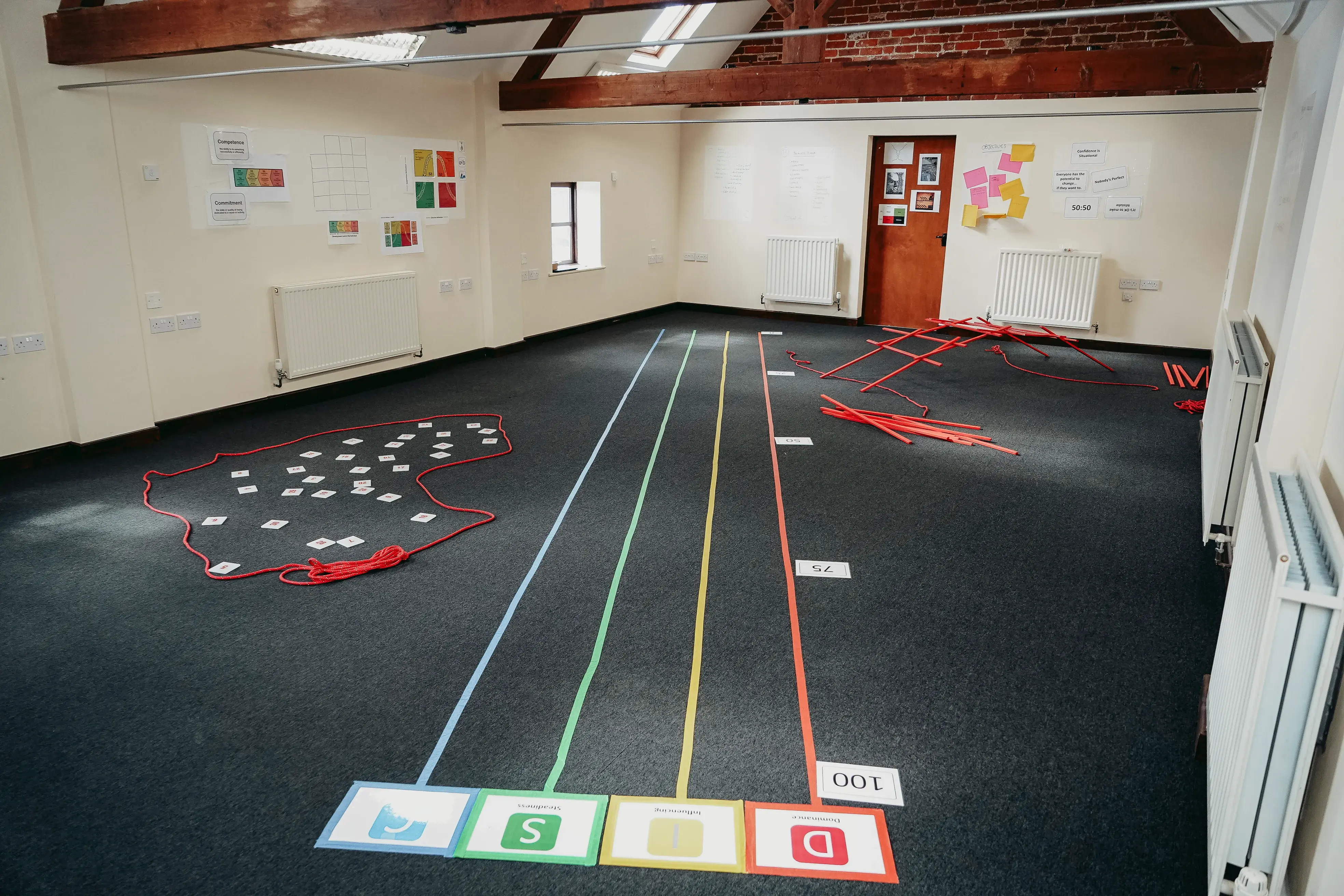
The Model is Built Around Four Behavioural Preferences:
Dominance
Influence
Steadiness
Compliance
These preferences can affect how someone communicates, makes decisions, responds to pressure and works with colleagues.
Although many people search for “DISC model personality types”, that phrase needs care. DISC is best understood as a behavioural framework, not a fixed personality test. It does not presume to decide who someone is, measure ability or place a permanent label on an employee. Instead, it helps people understand observable patterns in workplace behaviour and how those patterns may be experienced by others.
Used properly, DISC gives teams a practical way to discuss behaviour without making it personal.
What is the DISC model?
The DISC model describes four broad behavioural styles: Dominance, Influence, Steadiness and Compliance. In reality, most people show a mixture of all four depending on the context, with some preferences becoming more visible depending on the task, environment or level of pressure.
Despite this caveat, in a commercial setting, DISC can help explain why two capable employees respond differently to the same situation. One may want a fast decision. Another may want discussion and buy-in. Another may want consistency and time to adjust. Another may want evidence, process and clear standards. These differences can support a team when they are understood and managed appropriately, but can create friction when they are misread.
So, what do the categories mean in practice?
Dominance
Dominance is associated with a direct, decisive and results-focused approach. People with this preference may favour quick decisions, clear outcomes and action-oriented communication. Within a team, this preference can be valuable when decisions need to be made, but it can create tension if others experience the behaviour as impatient or dismissive.
Influence
Influence is associated with enthusiasm, persuasion, collaboration and relationship-building. People with this preference often bring energy to discussions and encourage participation and shared thinking. Influence can help teams maintain optimism and engagement, but colleagues may need clearer actions and ownership before an idea becomes a deliverable.
Steadiness
Steadiness is associated with patience, consistency, cooperation and support. People with this preference often help create calm, dependable working relationships and may value stability and reflection before making decisions. This can be helpful in teams that need trust and continuity, but important concerns may not always be raised early enough.
Compliance
Why Businesses Use TTI Success Insights DISC

TTI Success Insights DISC is used by organisations around the world to support communication, leadership development and team collaboration. The framework gives businesses a practical way to discuss workplace behaviour without reducing employees to fixed labels or stereotypes.
Many people are introduced to DISC through simplified colour systems, but workplace behaviour is rarely that straightforward. Most employees display a blend of behavioural preferences, and those preferences can shift depending on context, environment and pressure. TTI Success Insights DISC goes beyond assigning people to a single “type”. The framework helps teams explore how behavioural preferences interact in real workplace situations, giving managers and employees a more practical way to improve communication, collaboration and decision-making.
Unlike simplified “colour-only” DISC models, TTI Success Insights DISC explores the intensity and combination of those behavioural preferences in more detail. This creates more meaningful insight into how employees communicate, respond to pressure and work with others in different situations.

How DISC types help teams work better together
Understanding DISC profile personality types helps your teams reduce the everyday misunderstandings that undermine performance. For example:
When teams use the DISC framework as it was designed to be used, they can build a more precise language for working together. Meetings can be structured to include discussion, evidence and decisions. One-to-one conversations can be adapted so that feedback can be candid without being damaging. Project roles can be shaped around different preferences, while still helping people push their limits and develop their skills.

How we help
Penguin Learning helps organisations use DISC practically in a wide range of commercial contexts and situations. Through TTI Success Insights behavioural assessments and facilitated bespoke workshops, your employees and managers can explore their DISC reports, understand the mix of behavioural preferences in their teams and apply those insights to real conversations, decisions and working relationships.
Find out more
If you want to understand the DISC personality test types in a way that supports better communication and stronger collaboration, please contact us to discuss a workshop for your organisation.

Unlock the Potential of Your Leaders & Teams
Struggling with disengaged staff, underperforming managers, or siloed teams? Our proven leadership development programmes are designed to transform managers into confident leaders and build teams that consistently deliver results.
Book your free discovery meeting today and speak directly with a Penguin Learning specialist about how we can help you:
Develop leaders who inspire and motivate
Improve team performance and collaboration
Drive measurable business impact
Take the first step towards a stronger, more effective organisation, fill out the form now and let’s discuss your goals.
Frequently Asked Levy Questions

Who are your management development programmes for?
Our programmes are designed for a range of professionals, from those taking their first step into a management role to experienced leaders looking to refine their skills. We have tailored solutions for new managers (e.g., Transition to Management) as well as for experienced leaders (e.g., Developing High Performing Teams).
How do you measure the success of a management development programme?
We focus on measurable outcomes. Success can be measured through various methods, including pre- and post-programme assessments, 360-degree feedback, participant self-assessments, and tracking key performance indicators (KPIs) like employee engagement, retention rates, and team productivity.
Are your programmes accredited?
Yes, our Team Leadership ILM Level 3 Apprenticeship is an accredited programme that leads to a formal, nationally recognised qualification. Our other courses, while not formally accredited, are built on proven methodologies and industry best practices.
Can you customise the content to fit our company's specific needs?
Absolutely. While we have a range of established programmes, we specialise in tailoring the content, examples, and case studies to your organisation's specific culture, values, and strategic goals.
Are galaxies really moving away from us or is space just expanding?
Lorem ipsum dolor sit amet, consectetuer adipiscing elit. Aenean commodo ligula eget dolor. Aenean massa. Cum sociis natoque penatibus et magnis dis parturient montes, nascetur ridiculus mus. Donec quam felis, ultricies nec, pellentesque eu, pretium quis, sem. Nulla consequat massa quis enim. Donec pede justo, fringilla vel, aliquet nec, vulputate eget, arcu. In enim justo, rhoncus ut, imperdiet a, venenatis vitae, justo. Nullam dictum felis eu pede mollis pretium. Integer tincidunt. Cras dapibus. Vivamus elementum semper nisi.
Why do we think that the expansion of the Universe is accelerating?
Lorem ipsum dolor sit amet, consectetuer adipiscing elit. Aenean commodo ligula eget dolor. Aenean massa. Cum sociis natoque penatibus et magnis dis parturient montes, nascetur ridiculus mus. Donec quam felis, ultricies nec, pellentesque eu, pretium quis, sem. Nulla consequat massa quis enim. Donec pede justo, fringilla vel, aliquet nec, vulputate eget, arcu. In enim justo, rhoncus ut, imperdiet a, venenatis vitae, justo. Nullam dictum felis eu pede mollis pretium. Integer tincidunt. Cras dapibus. Vivamus elementum semper nisi.
Latest Case Study

Beyond the Buzzwords: A Case Study in Team Cohesion with Orrjo
Building Bridges, Not Barriers: A Case Study in Effective Management with the Co-op
From Collections to Conversations: How Hoist Finance Boosted Conversions with Targeted Training

Book A Free Consultation
Ready to develop confident leaders and high-performing teams?
A company-wide DISC workshop can improve workplace culture, boost team performance, and create better communication across your organisation.
Book a free consultation with one of our leadership development specialists today.